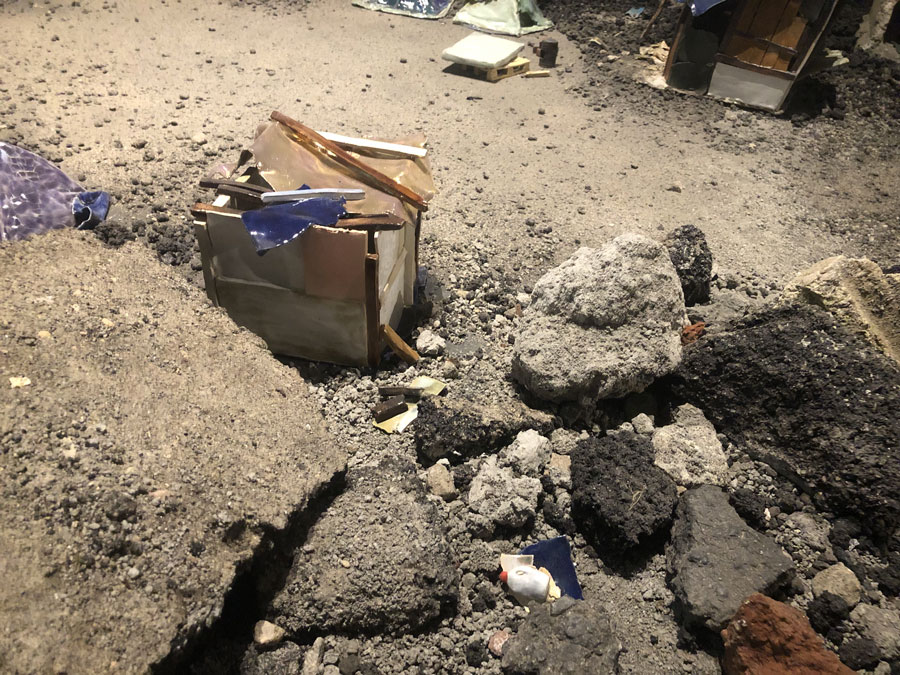
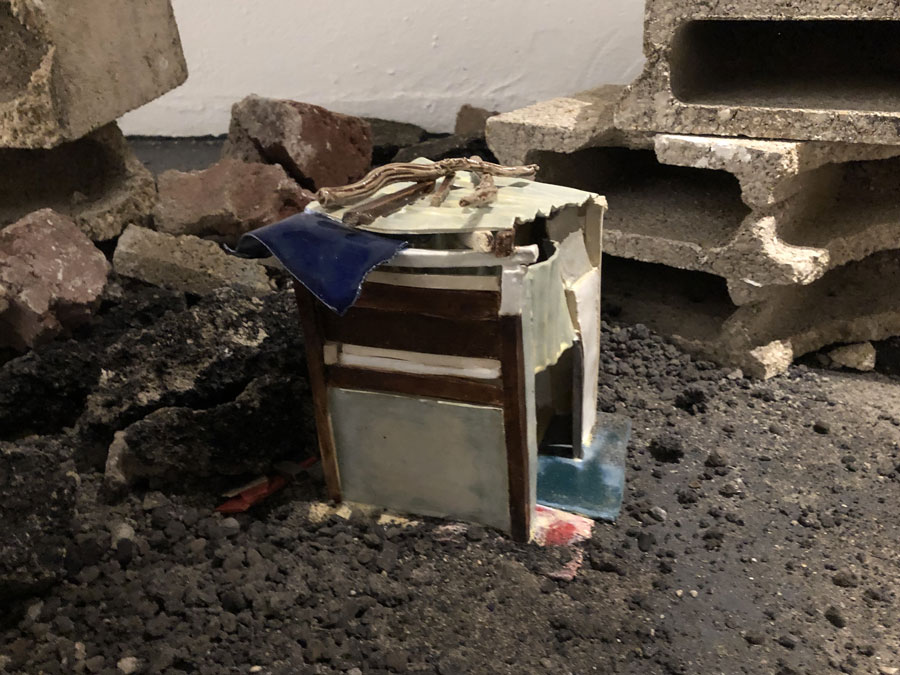
Exhibition Resistance / Cabins 2, 100ecs, invited by Muriel Patarroni.
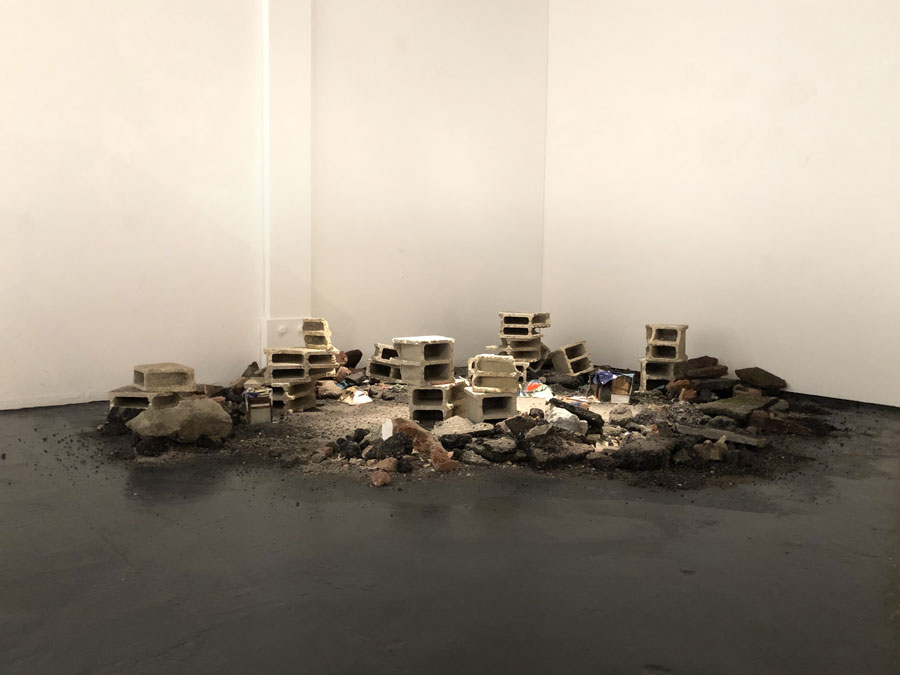
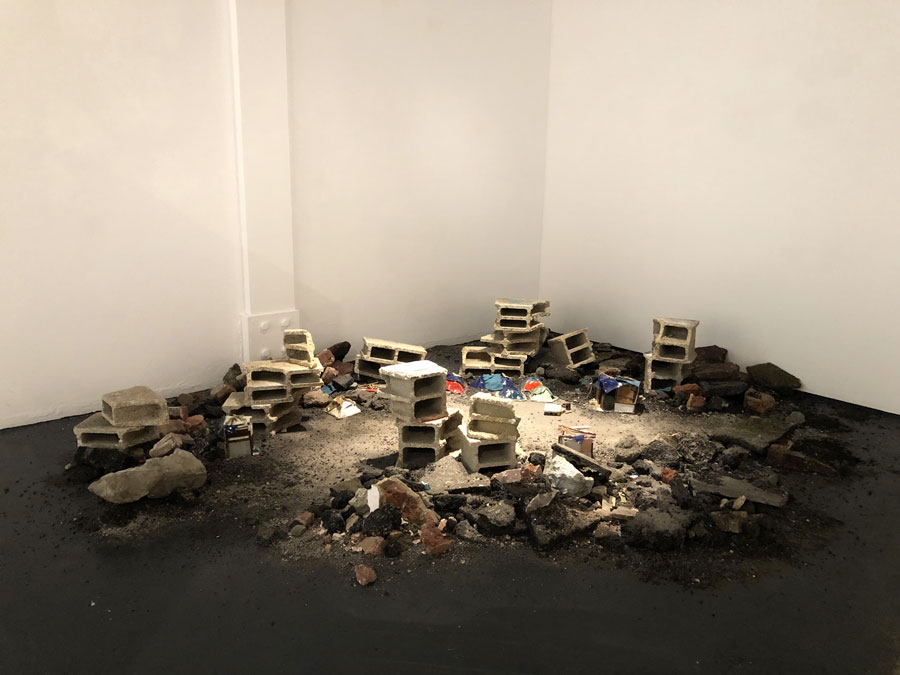
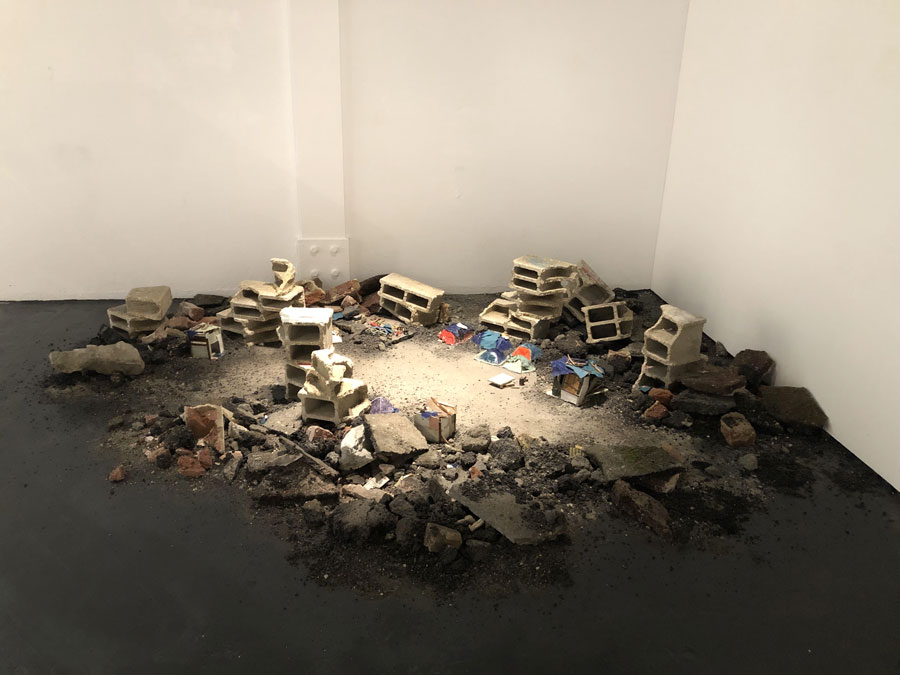
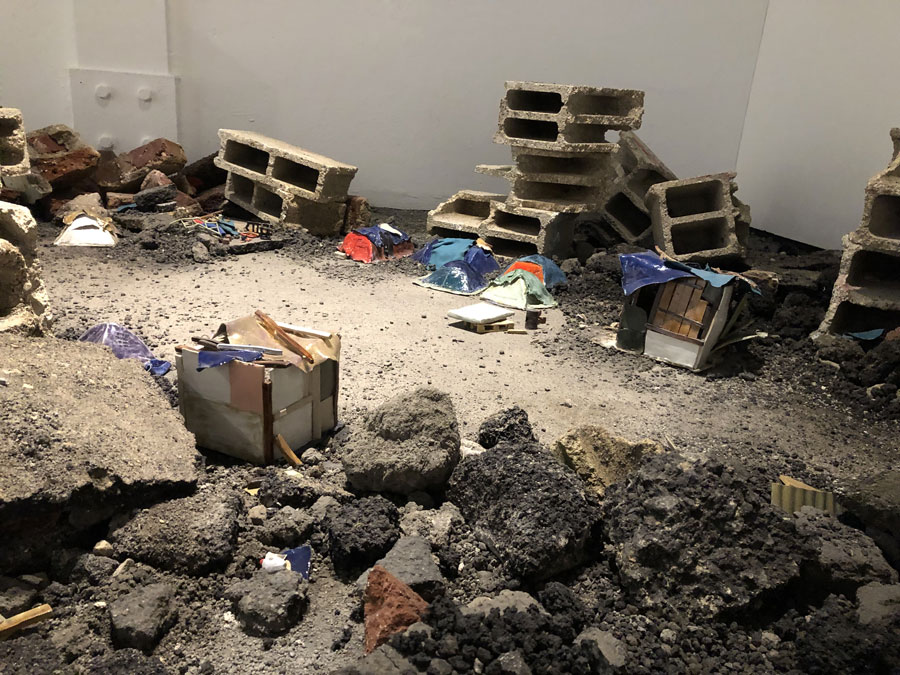
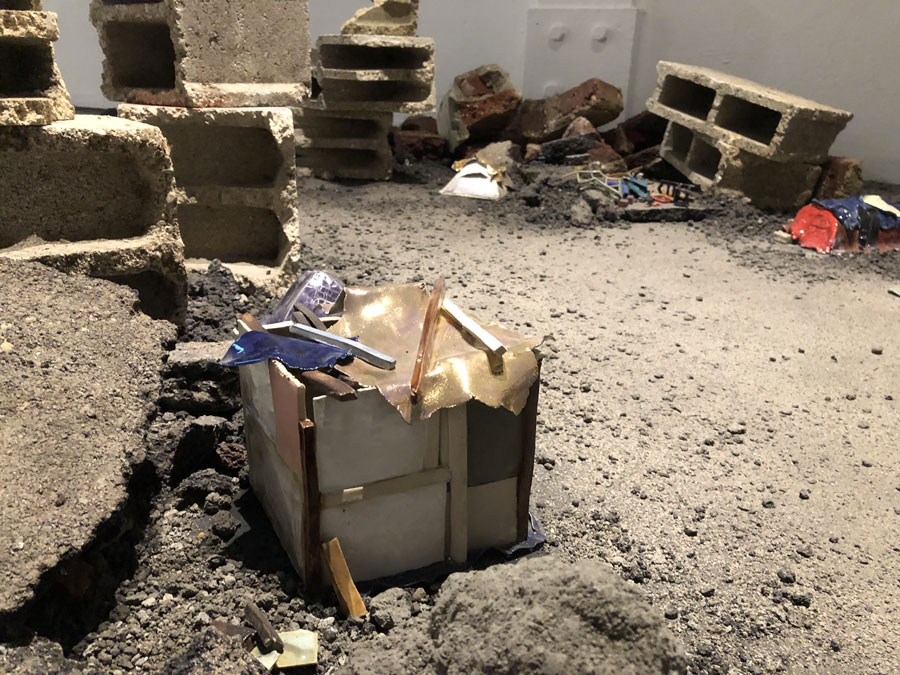
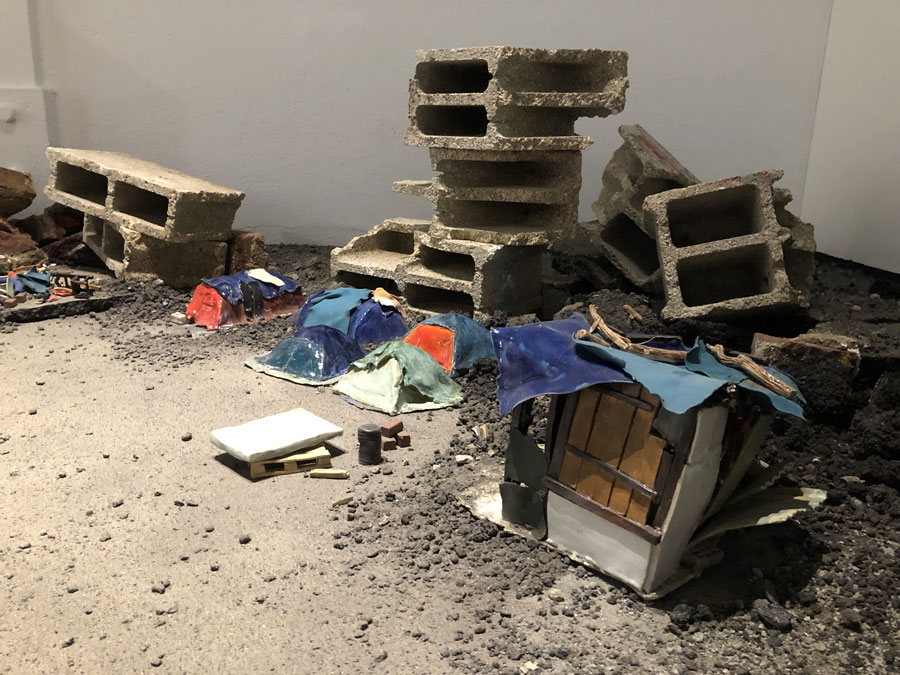
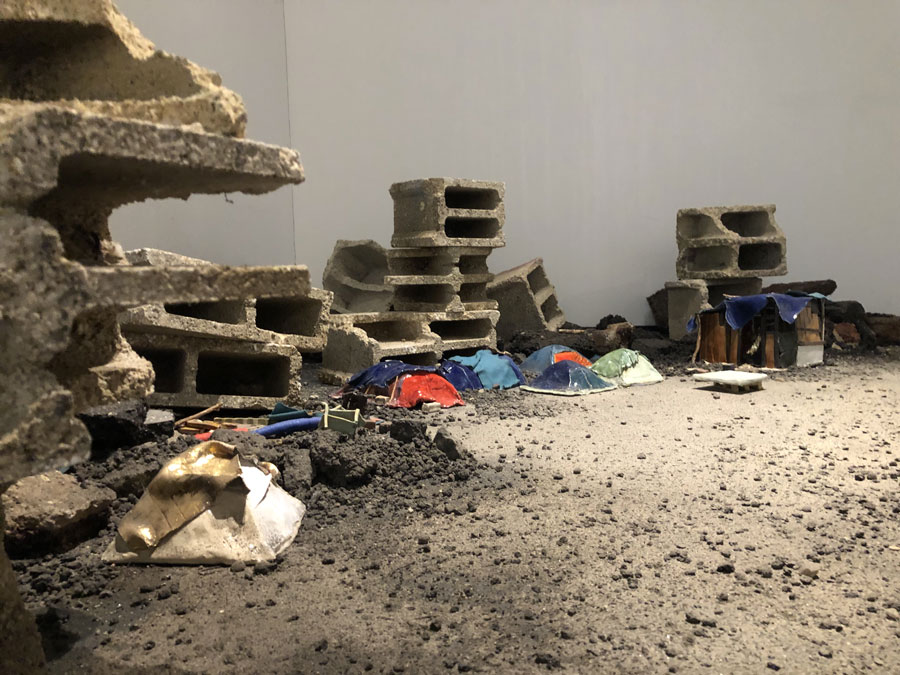
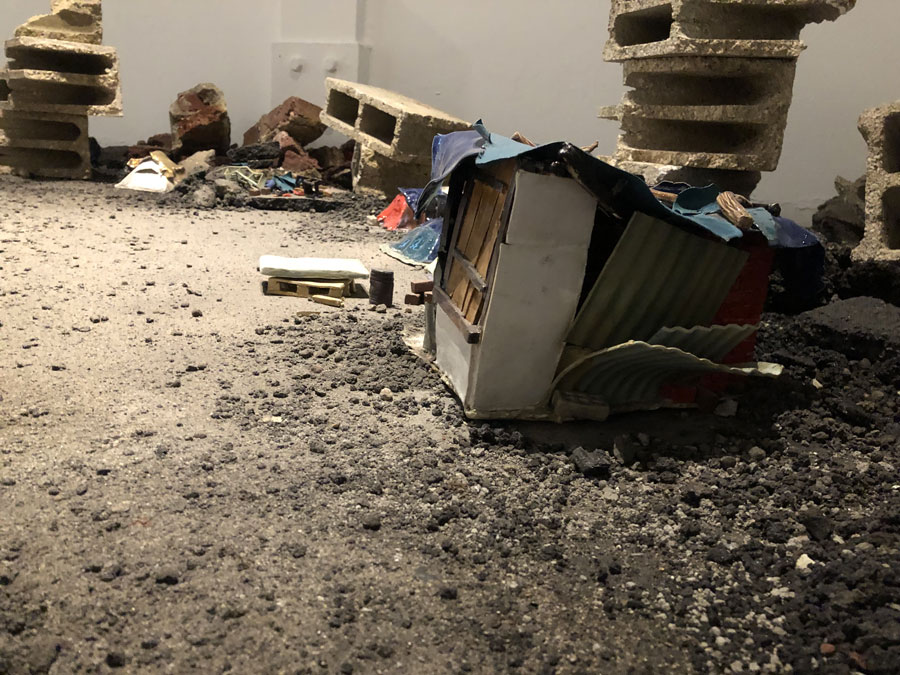
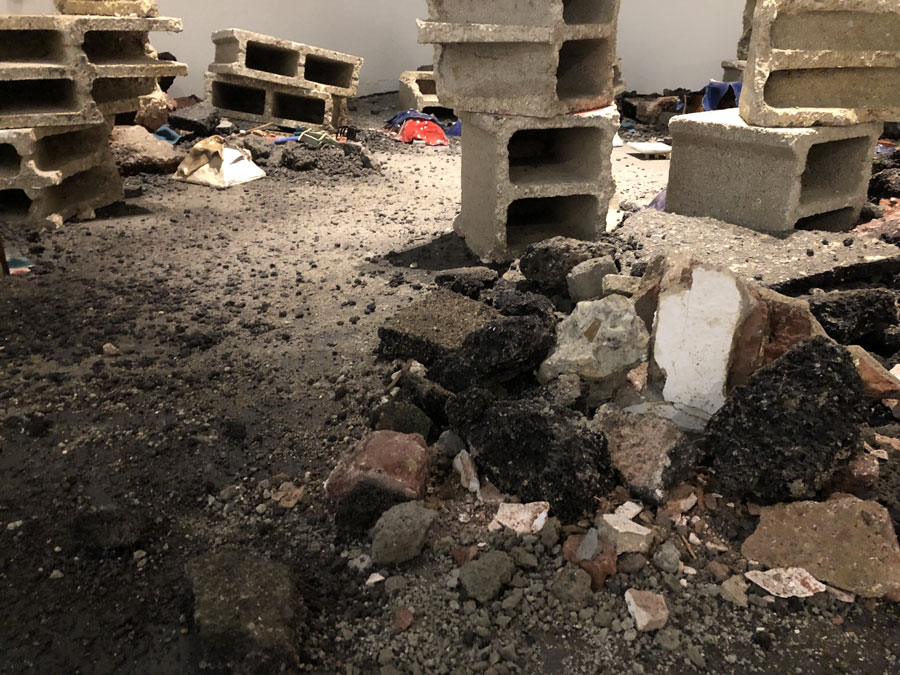
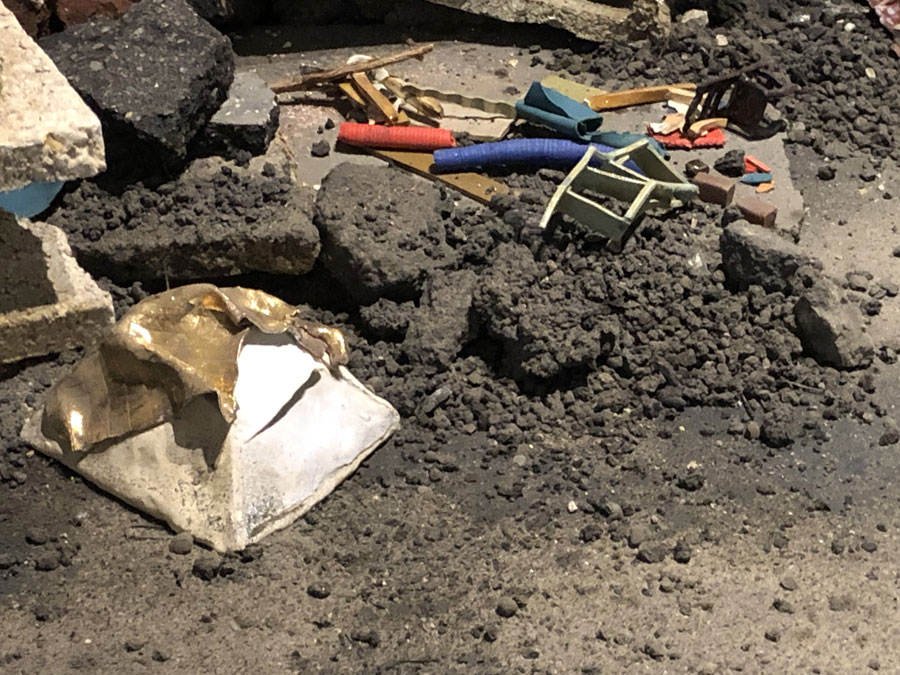
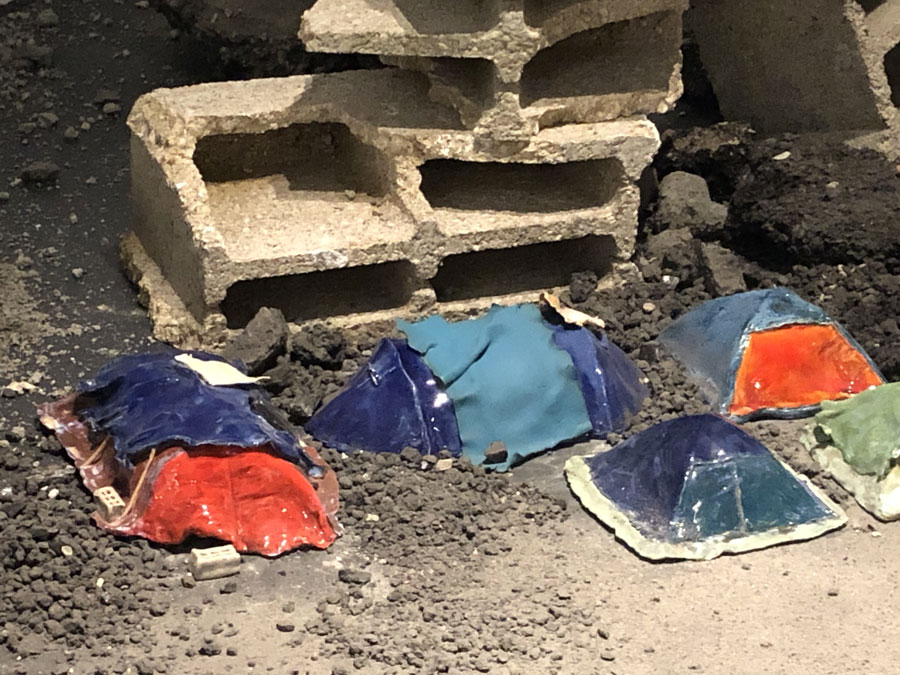
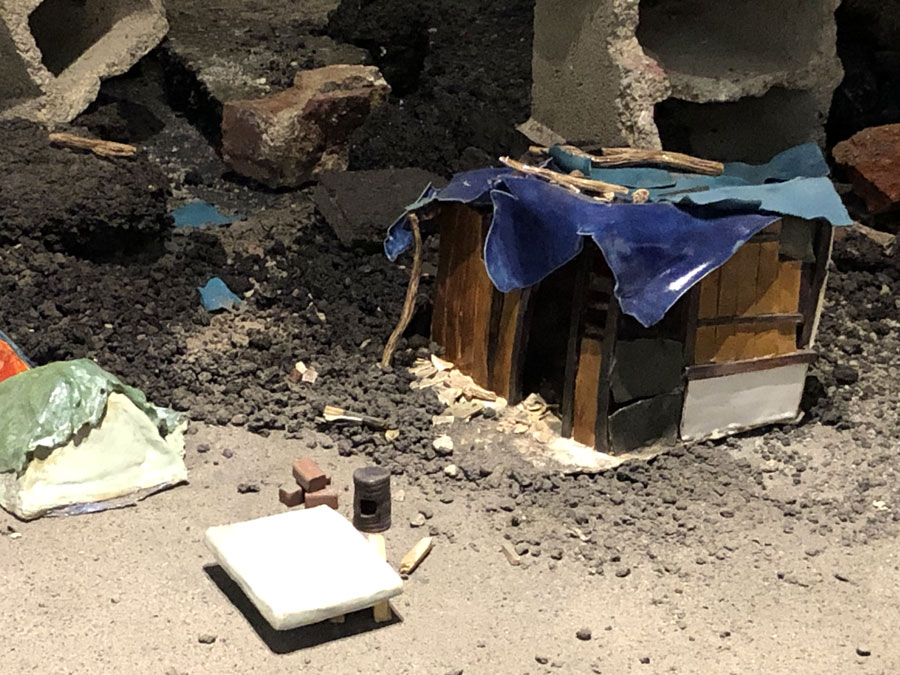
When Jean Genet gazed upon Alberto Giacometti's emaciated bronzes in his studio, he felt their "strange power to penetrate the realm of death, perhaps seeping through the porous walls of the kingdom of shadows." When approaching Shells, the viewer bends down to better appreciate the piles of tar and crumbling cinder blocks, the tents with their shiny glaze and the colorful huts arranged on ash, a doubt seizes them: to which realm does this scene belong?
For this installation by Aurélie Slonina brings together two main themes in her work, making it difficult to interpret. Over the past twenty years, the artist has continually questioned what it means to be "undesirable" in a city. Nature resisting urban domestication was the first figure. Think of the wild/crash/push planters (2008-2011), the mushrooms in the Hepatica Fistulina series (2010), or the stencils in Fluorescence (2017). A second figure was that of the migrant, with the installation Guests (2017): blue plastic sheets, folded like napkins, were arranged within a social housing complex at Porte de Vincennes. But in recent years, his work has taken on a more melancholic tone. In Dérive des météores (2020), suspended concrete monoliths echo the loneliness of a small ceramic figure. In Sous-bois (2022), party souvenirs—golden high heels, sequins, lipstick—are abandoned alongside trash bags and rubble. Through assemblages of everyday objects modeled in ceramic, Les vautours (The Vultures, 2024) recalls the life of a deceased person, and 202020 (2024) that of a young woman during lockdown.
Shells reactivates the figure of the undesirable, suggested by these makeshift shelters, while associating it with the visual lexicon of devastation, debris, and the past. Is it a camp on the outskirts of a large metropolis? A war scene? A post-apocalyptic landscape? A reminiscence of a mythical Golden Age, kept away from cities? Whatever the interpretation, one feeling takes hold of the viewer: of all human constructions, these shelters seem to be the most precious.
Thomas Maillet-Mezeray École Normale Supérieure - Department of Philosophy |