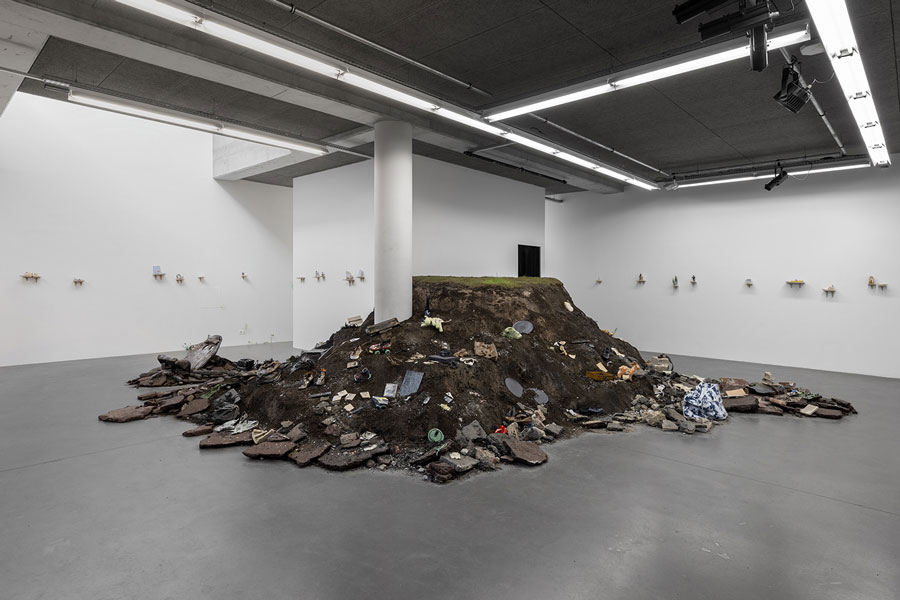
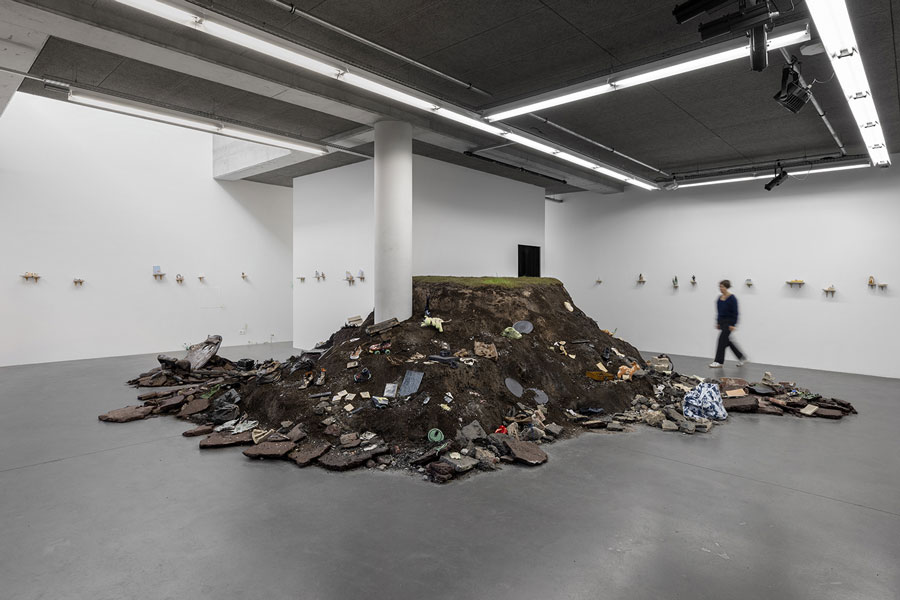
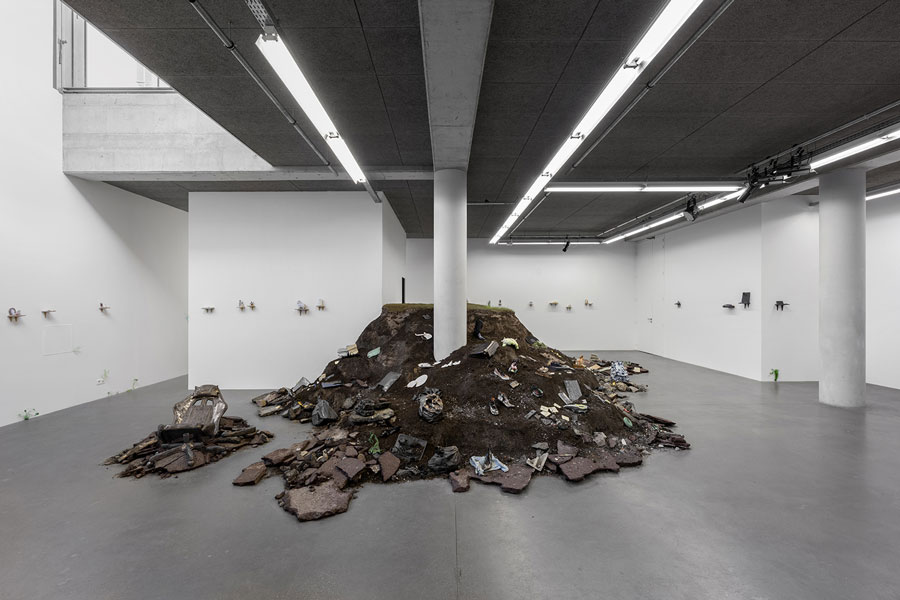
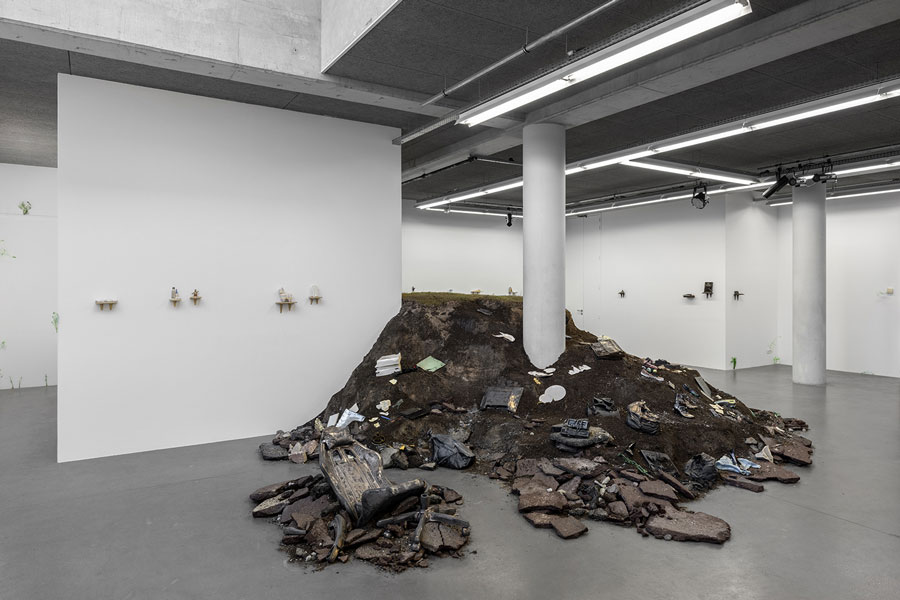
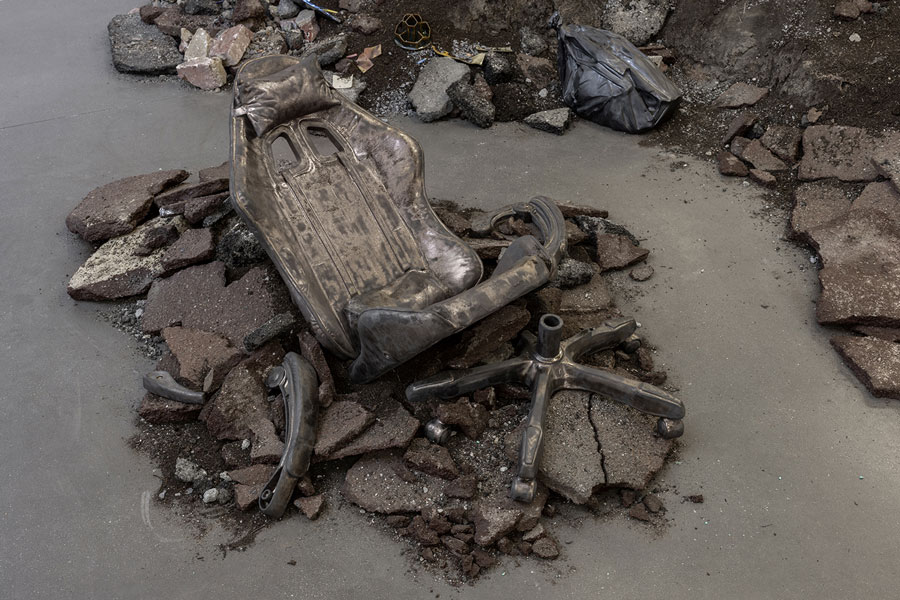
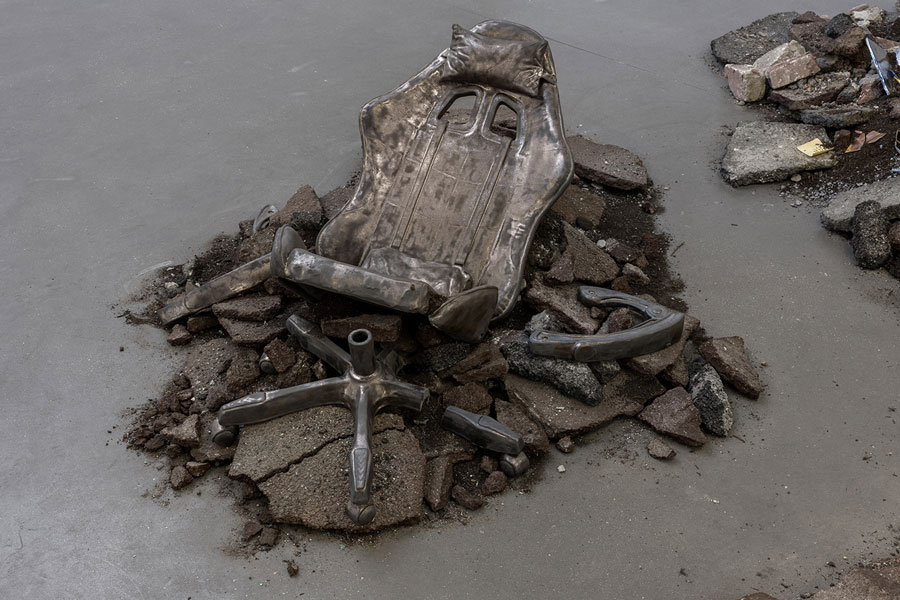
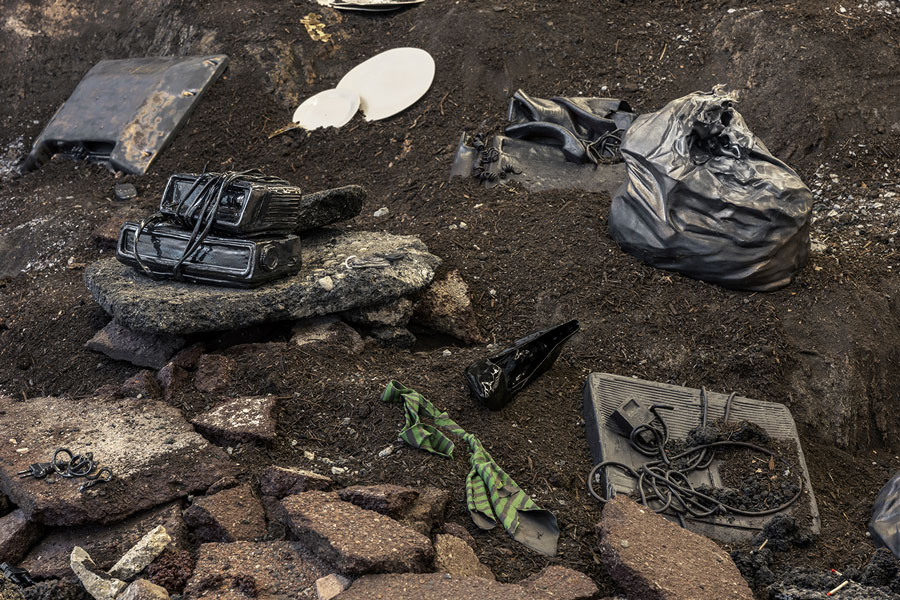
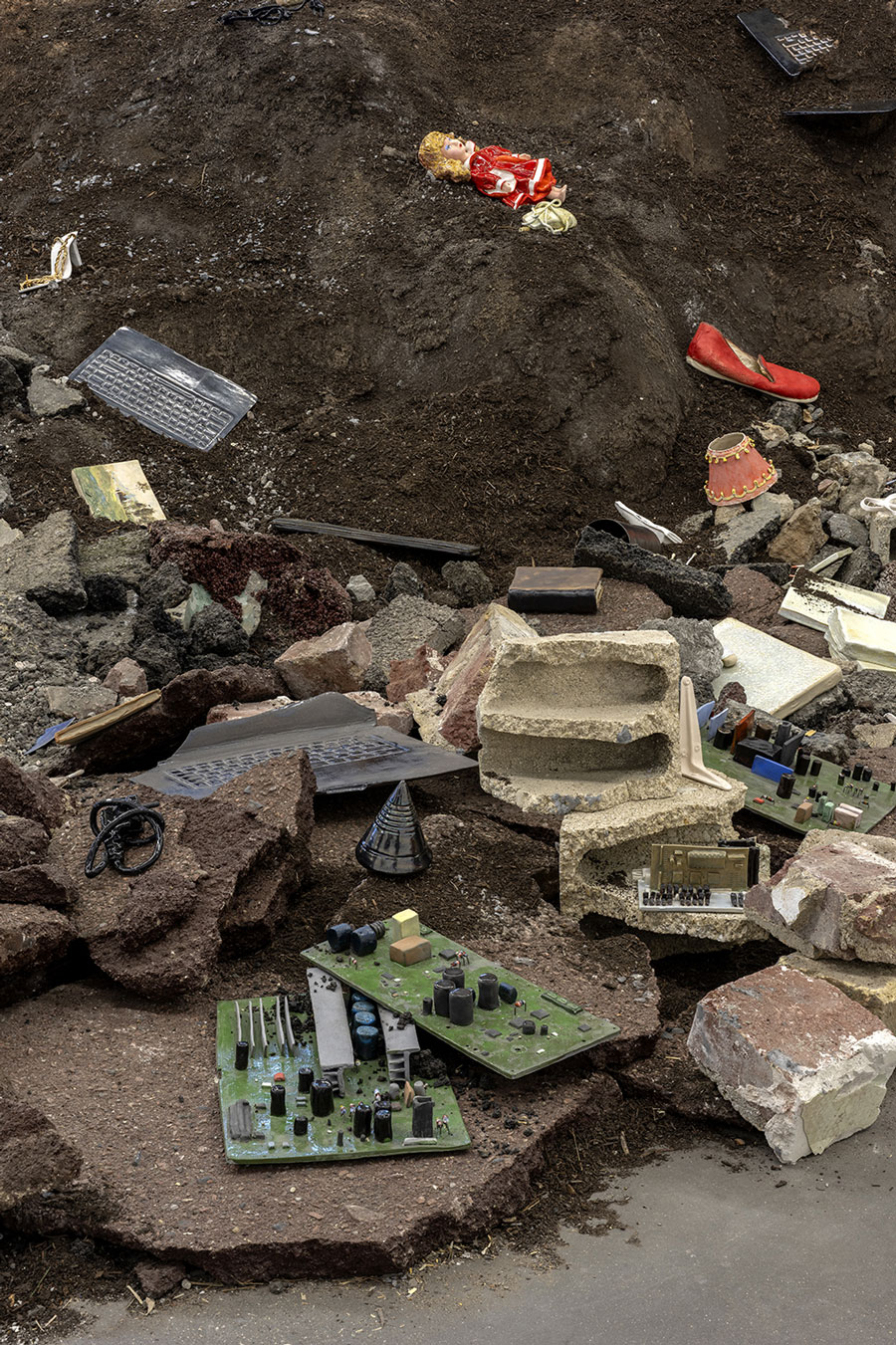
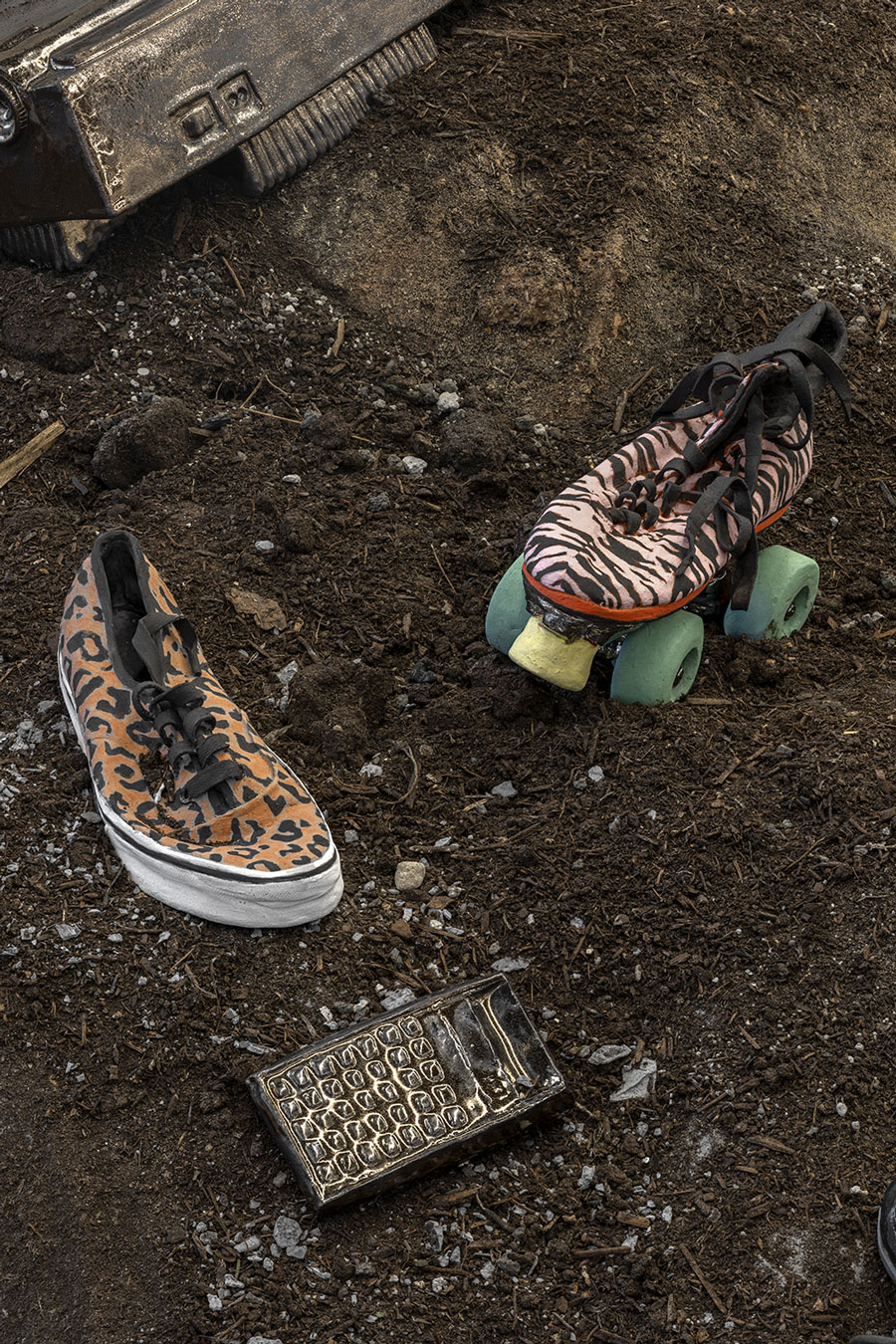
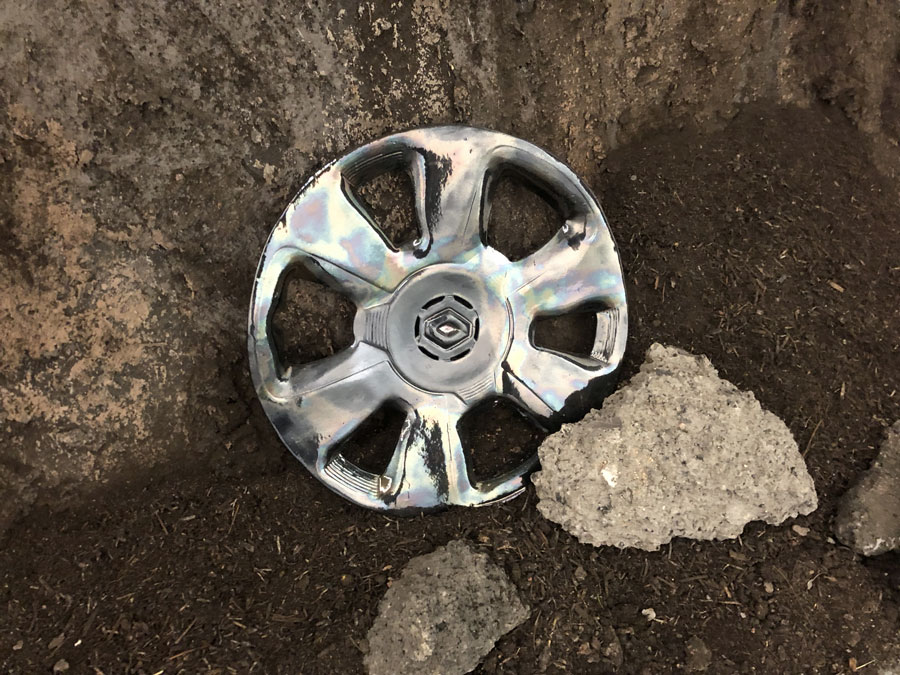
802 701 - The Meadow, 2026 |
|---|
Glazed stoneware, porcelain, gold and silver lustre / grass, mound of earth, asphalt, bricks, cinder blocks / Variable dimensions |
|---|
La Terrasse - art space, Solo Exhibition, invited by Emmanuel Posnic. Through the exhibition 802 701, Aurélie Slonina explores the connections between time and space, juxtaposing them by revealing the imprints of human activity in the ground and in the earth—the traces left by everyday objects, their transformation into residue, and their eventual disappearance. To this end, she draws on H. G. Wells’s fictional narrative *The Time Machine* (1895), in which the reader accompanies a scientist on his discovery of a future society where privileged individuals enjoy an idle life in a preserved environment. Their standard of living is sustained by an entire population of dominated and exploited workers, condemned to a shameful, hidden existence underground. Facing *La Prairie*, the visitor—a time traveler—encounters a mountain of earth, nature in all its majesty. The gaze is drawn to artificial anomalies and rests on objects whose status is uncertain: waste or treasures? La Prairie allows us to visualize the human traces left deep within the geological strata. It questions their value, their place, and their lingering presence in the environment, thereby crystallizing a plurality of temporalities: past, present, and future; intimate, social, and political. The visitor-explorer thus discovers strange and precious objects embedded in the strata, like jewels that both pollute and embellish the raw earth. Faced with this presence, the earth is not passive. It is transformed, inhabited, constructed, and permeated by concrete; it reacts, rises up, assimilating and transforming the intrusive objects that come to constitute it within a shifting relationship. These objects stem from a specific society: that of the La Défense office district in the 1980s—obsolete objects from the daily lives of workers housed in the tall glass towers that rise above the hill of La Défense, made up of slabs, strata, and underground passages. Thus, nestled within the strata of this chaotic underground space, we find a worn-out, tired, and wobbly gaming chair—a time-traveling machine, at once a throne and a ruin left behind by a bygone civilization; computers, with their hybrid status as tools of production and alienation, yet also of intimate leisure and escape, of journeys through time and space; cables like bonds that fuel these service-sector activities; trash bags; a doll, shoes, an undone tie… Aurélie Slonina explores this tension, this direct relationship between the economic actors of modern capitalism—removed from the natural world—and the major geological transformations their decisions inflict upon nature. Julie Blanck, Associate Professor of Political Science at Paris 8 University.
|